


I woke this morning thinking of a short fiction story about Margaret Murrell, the hero of the historical novel I published last year, my great great great grandmother, getting inside her head. I planned it out as I lay in bed. We drove over the hill to Orton Bradley Park on Banks Peninsula, walked among the rhododendrons. Great bushes of flowers, pink, white, red, occasionally an astonishing parchment yellow bowed to us, colours like fireworks over our heads but softer, bending to embrace, envelop in fluffy petals, scent of sweet muskiness like old paper rolled in honey.
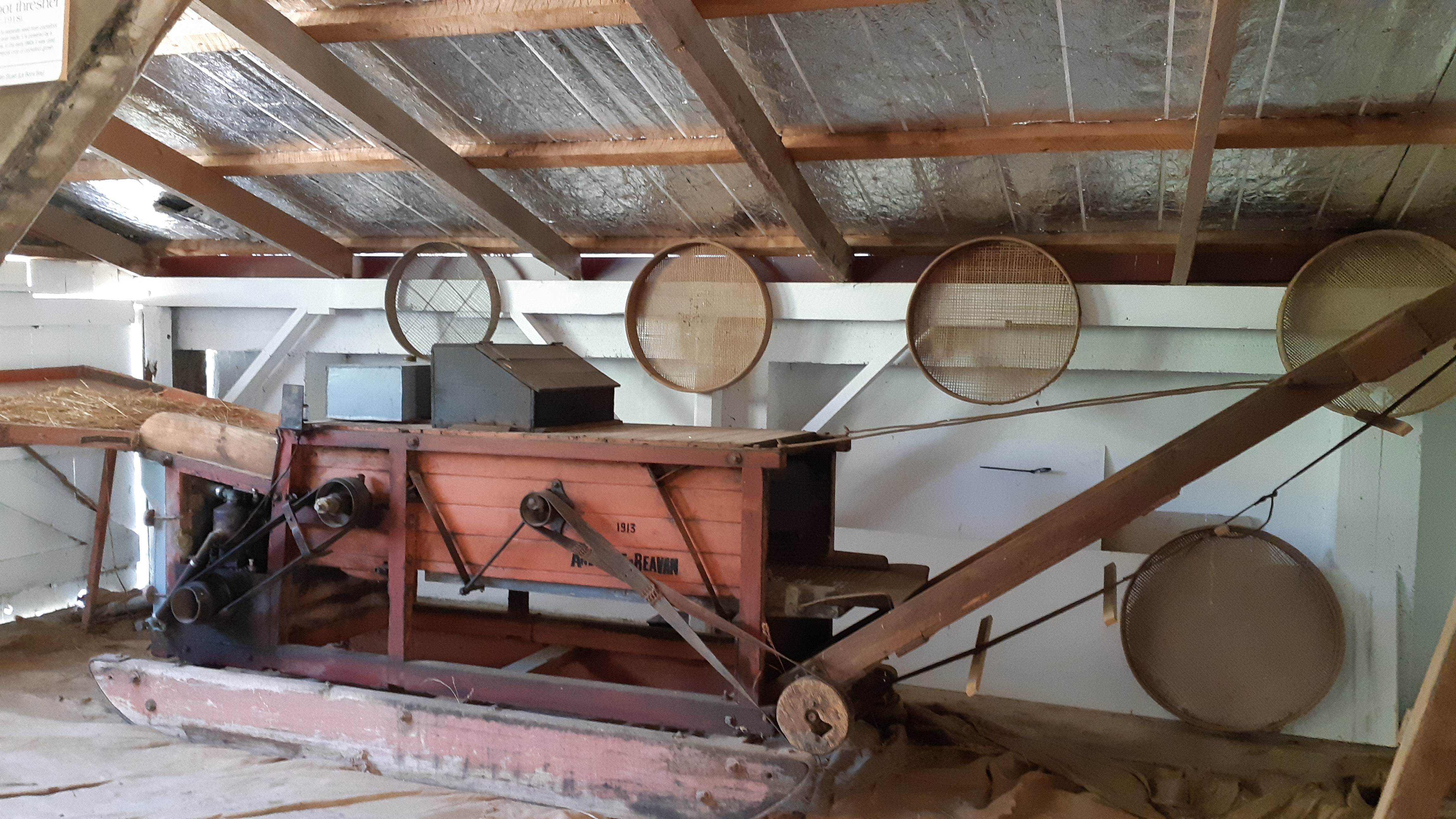
After tea in the café we looked at the farm machinery. I photographed the cocksfoot thresher and its sign board, might be useful for a story about my grandfather’s grandmother. She was a teacher, spoke seven languages, came with her teacher husband to Pigeon Bay. She wouldn’t of course have taken part in the farming, but must have seen it. Family stories say she encouraged the growing dairy industry by distributing Scottish cheese recipes to the settlers’ wives. She thought they needed more to occupy them.
As we walked through the forest up the valley behind the farm buildings I thought of a story of my grandmother, the astonishment and fear she must have felt seeing the stone buildings of Otago University where she was to study medicine, way outside the comfort zone of herself or her father who accompanied her on the coastal ship to enrol. I must work on her story too.
It’s very hard to know how much to make these stories fiction, invent the characters to some extent, their feelings, thoughts, or stick to the facts but write creatively. Where does fiction end and history begin?
 Susan Cambridge Writer
Leave a comment